
(Long, SEO-optimized, Ads-friendly & Beginner-friendly)
Automation is one of the most underrated yet powerful strategies in personal finance. Many people struggle with consistency — saving one month, forgetting the next; paying bills late; or losing track of debt payments. Automating your finances eliminates these problems by making your money work without requiring daily willpower.
Below is a deeply detailed breakdown designed for SEO optimization, readability, and maximum value.
—
What Does “Automating Your Finances” Really Mean?
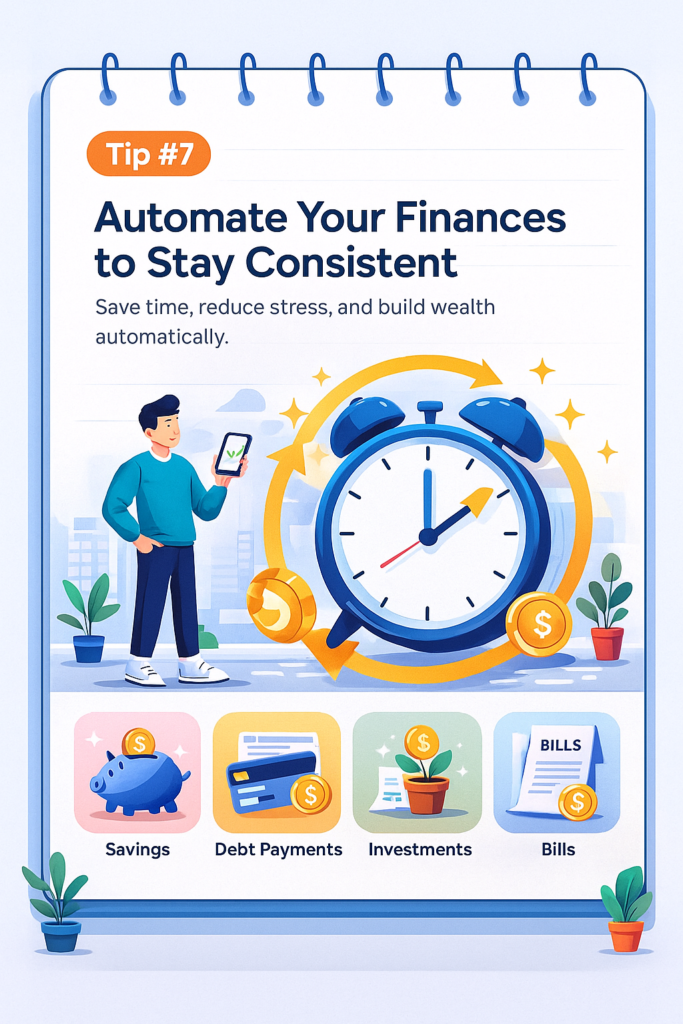
Automating your finances means using digital tools, bank features, and budgeting apps to allow your money to automatically move to the right places without you manually doing it each month.
This includes automating:
✔ Savings transfers
✔ Emergency fund contributions
✔ Investment deposits
✔ Debt payments
✔ Bill payments
✔ Budget tracking
✔ Expense notifications
Instead of you managing money, the system manages it for you.
—
Why
Automation Is a Game-Changer (Backed by Psychology & Data)
One of the biggest obstacles for people is inconsistency. Even financially smart people fail to save or pay bills on time because life gets busy.
Automation solves these psychological problems:
Removes the need for daily discipline
When money moves automatically, you don’t need motivation or memory.
Prevents emotional spending
If your money goes to savings before you touch it, you can’t spend it carelessly.
Ensures consistent progress
Even when you’re busy, sick, traveling, or stressed, your financial system keeps working.
Reduces stress and decision fatigue
Fewer decisions = fewer mistakes.
Builds habits effortlessly
Repeating automated actions creates long-term stability.
—
How to Set Up Full Financial Automation (Step-by-Step Guide)
This section is designed for SEO and actionable advice.
—
Step 1: Choose a Primary Bank for Incoming Income
Make sure salary or business earnings land in one main account. This is the “root” of your financial tree.
SEO Keywords: primary account, salary account, personal finance setup, banking automation.
—
Step 2: Set Automatic Transfers for Savings
Automate a percentage of income (even 5–10%) to a dedicated savings account.
Set this transfer to happen:
the same day your income arrives
every month without fail
This protects your money before you start spending.
—
Step 3: Automate Your Emergency Fund Contributions
Your emergency fund should grow every month without manual effort.
Example:
Every 1st date → $10 / $20 / $50 to Emergency Account
Continue until you hit 3–6 months of expenses
This creates financial protection instantly.
—
Step 4: Automate Debt Payments
High-interest debt becomes cheaper and easier when paid automatically.
Automation helps you:
avoid late fees
reduce interest accumulation
build a perfect payment history
Set automatic payments for: ✔ Credit cards
✔ Loans
✔ Financing plans
—
Step 5: Automate Investments
If you invest manually, you’ll skip months.
Automated investing ensures long-term growth.
Examples:
Automatic weekly crypto buys
Automatic stock purchases
Monthly index fund deposits
Automated micro-investing apps
Even $5–$20 regularly compounds hugely over years.
—
Step 6: Set Up Auto-Bill Pay
Automate payments for: ✔ Internet
✔ Phone
✔ Subscriptions
✔ Rent (if your bank supports it)
✔ Insurance
✔ Utilities
This protects your credit and financial reputation.
—
Step 7: Use Budgeting Apps with Auto-Tracking
Apps like:
YNAB
PocketGuard
Mint
Spendee
GoodBudget
These sync your bank transactions automatically and categorize spending for you.
This gives you full visibility without manual work.
—
Benefits of Full Financial Automation
This section is written SEO-style with keyword inclusion.
1. You save more without trying
People who automate savings save 2x to 4x more than those who don’t.
2. You become debt-free faster
Automatic payments shorten debt payoff time.
3. You reduce financial stress
You always know bills are paid and savings are growing.
4. You avoid late fees
Automation protects your credit score.
5. You build long-term wealth effortlessly
Your money grows while you sleep.
—
Common Mistakes to Avoid When Automating Finances
To make the post deeper and more SEO-friendly.
Automating without checking balances
Not updating automation when income changes
Too many small automations that become confusing
Forgetting subscription renewals
Ignoring account alerts
—
Pro Tips to Make Financial Automation Even More Powerful
Use a “Two-Account System”
Account 1 → Salary
Account 2 → Spending
Everything else (savings, investments, bills) is automated before money reaches your hands.
Add Alerts
Set notifications for:
low balance
large purchases
deposit confirmation
failed automation
Review automation every 3 months
This ensures your system stays aligned with your goals.
—
Conclusion: Automation = Financial Freedom
Automating your finances is like hiring a personal financial assistant who works 24/7.
It keeps you consistent, protects your money, prevents stress, and helps you build wealth automatically.
Even if you start small, automation creates long-term transformation.