

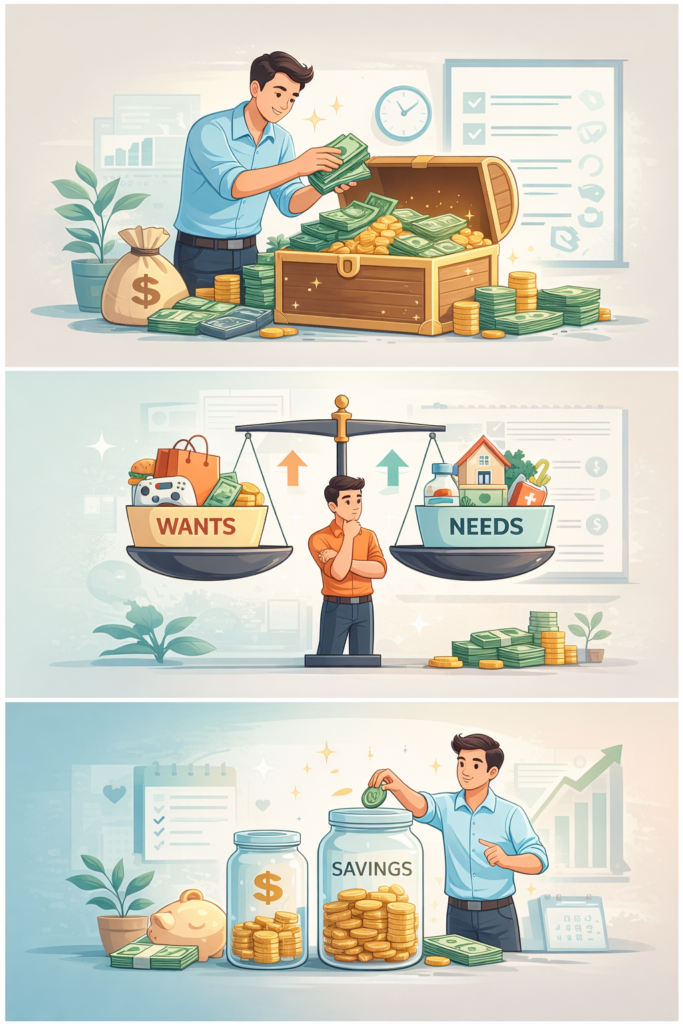
Most people believe that wealth is created through big moments—landing a high-paying job, starting a successful business, or making a lucky investment. In reality, long-term wealth is built through small, everyday financial decisions repeated consistently over time.
Every choice you make about money—how you spend, save, borrow, invest, and protect it—shapes your financial future. These decisions may seem insignificant on a daily basis, but when combined over months and years, they determine whether you struggle financially or build lasting wealth.
This article is written for everyday people. You do not need to be wealthy, highly educated, or financially experienced. You only need awareness, discipline, and a willingness to improve one decision at a time.
—
1. Understanding Wealth as a Process, Not a Destination
Wealth Is Built Slowly
True wealth does not happen overnight. It is the result of:
Consistent habits
Long-term thinking
Patience
Discipline
People who chase quick money often lose it just as fast. Those who focus on systems and habits tend to build sustainable wealth.
Financial Freedom vs. Richness
Being wealthy does not always mean being rich. Financial freedom means:
You can meet your needs comfortably
You are not constantly stressed about money
You have options and flexibility
Your money supports your life goals
Everyday financial decisions are what move you toward that freedom.
—
2. The Power of Daily Spending Decisions
Small Expenses Matter More Than You Think
Many people ignore small daily expenses:
Coffee
Snacks
Subscriptions
Impulse purchases
While each cost may be small, together they can drain thousands of dollars annually.
Wealthy individuals are not cheap—they are intentional.
Conscious Spending
Ask yourself:
Do I need this?
Does this align with my goals?
Is this a habit or a choice?
Controlling spending does not mean suffering. It means directing money toward what truly matters.
—
3. Budgeting as a Tool for Control, Not Restriction
Why Budgeting Is Essential
A budget is not a punishment. It is a plan.
Budgeting helps you:
Understand where your money goes
Prevent overspending
Save intentionally
Reduce stress
Make confident decisions
People who avoid budgeting often feel confused and anxious about money.
Simple Budget Structure
A basic budget includes:
Income
Fixed expenses
Variable expenses
Savings
Investments
You do not need complex spreadsheets. Clarity is more important than perfection.
—
4. Saving: The Foundation of Financial Security
Why Saving Comes Before Investing
Saving provides:
Emergency protection
Stability
Confidence
Without savings, one unexpected expense can destroy progress.
Emergency Funds
An emergency fund should cover:
3–6 months of living expenses
Medical emergencies
Job loss
Unexpected repairs
This fund is not for luxury—it is for survival and peace of mind.
—
5. The Psychological Impact of Financial Stability
Reduced Stress
People with savings:
Sleep better
Make clearer decisions
Take fewer emotional risks
Financial stress affects:
Health
Relationships
Productivity
Mental well-being
Everyday saving decisions protect more than your money—they protect your life quality.
—
6. Managing Debt Wisely
Not All Debt Is Equal
There are two main types:
Bad debt (high interest, consumer debt)
Strategic debt (education, business, assets)
Uncontrolled debt destroys wealth slowly.
Everyday Debt Decisions
Ask:
Is this debt necessary?
Can I afford the repayments?
What is the interest cost over time?
Avoid debt that does not increase your long-term value.
—
7. Investing as a Long-Term Habit
Investing Is Not Gambling
True investing is:
Long-term
Diversified
Patient
Based on fundamentals
Short-term speculation often leads to losses.
Start Small
You do not need large capital to begin investing. The habit matters more than the amount.
Consistent investing builds wealth through compounding.
—
8. Compounding: The Hidden Force Behind Wealth
Time Is Your Greatest Asset
Compounding means:
Your money earns returns
Those returns earn returns
Growth accelerates over time
The earlier you start, the more powerful compounding becomes.
Even small amounts grow significantly with time and consistency.
—
9. Protecting Wealth Through Risk Management
Why Protection Matters
Wealth is not only about growth—it is also about protection.
Unexpected events can destroy years of effort without preparation.
Insurance and Planning
Basic protection includes:
Health insurance
Life insurance (if you have dependents)
Emergency planning
Protection allows wealth to survive crises.
—
10. Financial Discipline and Consistency
Motivation Fades, Discipline Lasts
Most people fail financially not due to lack of knowledge, but due to lack of discipline.
Daily discipline includes:
Tracking spending
Saving regularly
Avoiding emotional decisions
Staying focused on long-term goals
Small disciplined actions create big results.
—
11. Aligning Money With Life Goals
Money Is a Tool, Not the Goal
Ask:
What kind of life do I want?
What does financial success mean to me?
When money aligns with purpose, decisions become clearer and easier.
—
12. Avoiding Lifestyle Inflation
The Silent Wealth Killer
As income increases, many people increase spending immediately.
True wealth builders:
Increase savings first
Invest the difference
Maintain controlled lifestyles
Lifestyle inflation keeps people broke despite higher income.
—
13. Learning Financial Literacy Continuously
Knowledge Protects Wealth
Financial education helps you:
Avoid scams
Make better decisions
Adapt to change
Use tools wisely
Learning should be ongoing, not one-time.
—
14. Technology and Smart Financial Tools
Use Tools, Don’t Depend on Them
Apps and platforms help with:
Tracking
Automation
Analysis
But understanding fundamentals is more important than tools.
—
15. Building Wealth With Patience
Wealth Takes Time
Most overnight success stories hide years of effort.
Consistency beats intensity.
Focus on progress, not perfection.
—
Conclusion (Part 1)
Long-term wealth is built through everyday financial decisions, not rare opportunities. Each small choice either moves you closer to or further from financial freedom.
By controlling spending, saving consistently, managing debt wisely, investing patiently, and protecting your resources, you build a system that supports long-term success.
—
- 10 Xeelado Dhaqaale Oo Waxtar Leh Ramadan
- Ramadan Budgeting: Talooyin Wax Ku Ool Ah
- Everyday Financial Decisions That Lead to Long-Term Wealth.
- Smart Personal Finance Guide for Everyday People.
- Small Decisions, Big Wealth: Everyday Financial Tips